sponsored by
Haus am Lützowplatz
Stimmen, die sich suchen
Göran Gnaudschun
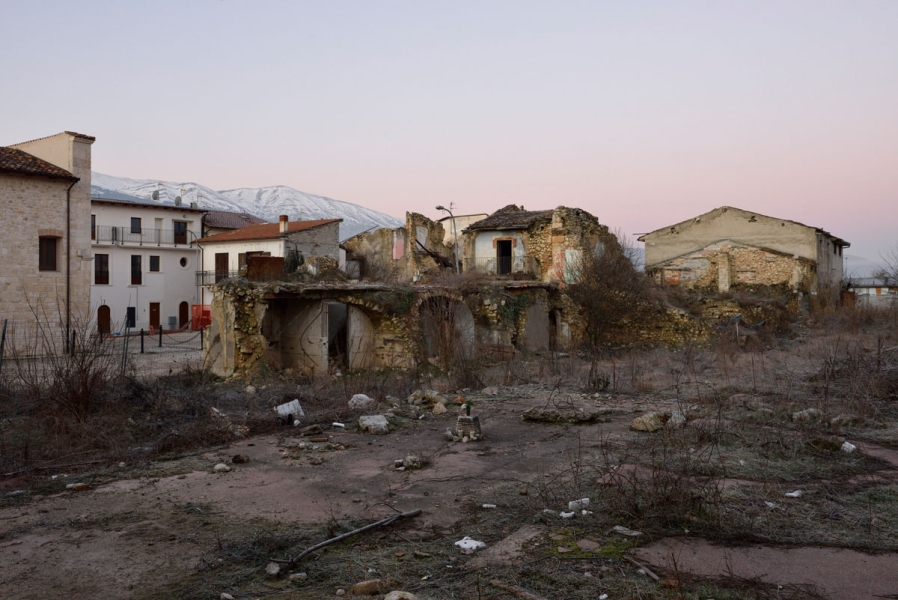 Göran Gnaudschun, Blick über Ruinen zur Piazza Umberto, 2019, aus: „Stimmen, die sich suchen“, 2018 – 2024
Stimmen, die sich suchen
Voices in Search of One Another
Voci che si cercano
Eröffnung:
Freitag, 20. Juni 2025, 19 Uhr
Opening:
Friday, 20 June 2025, 7 p.m.
Inaugurazione:
venerdì 20 giugno 2025, ore 19.00
Begrüßung / Welcome Address / Discorso di benvenuto:
Dr. Heinrich-Wilhelm Wörmann
Vorstandsvorsitzender / Chairman / Presidente del Consiglio Haus am Lützowplatz
Grußwort / Greeting /Saluto:
Alessandro Turci
Direktor / Director / Direttore dell'Istituto Italiano di Cultura di Berlino
Grußwort / Greeting /Saluto:
Antonella Perin
Leiterin Kulturprogramme / Head of Cultural Programmes / Direttrice Programmi Culturali Goethe-Institut Rom
Einführung / Introduction / Introduzione:
Dr. Marc Wellmann
Kurator der Ausstellung und Künstlerischer Leiter / Curator of the exhibition and Artistic Director / Curatore della mostra e direttore artistico Haus am Lützowplatz
Please scroll down for English version
Scorri verso il basso per la versione in italiano.
Das Haus am Lützowplatz zeigt aus Anlass des 80. Jahrestages der Befreiung Europas vom Nationalsozialismus eine Einzelausstellung des Fotografen Göran Gnaudschun (*1971 in Potsdam).
Am 6. April 2009 um 3:32 Uhr erschütterte ein gewaltiges Erdbeben die italienische Stadt L’Aquila und deren Umland. Besonders tragisch war es in dem in der Peripherie gelegenen Dorf Onna. Von den 300 Einwohnern starben in jener Nacht 40 Menschen. Nur noch ein Trümmerfeld blieb übrig. Bereits während des Zweiten Weltkriegs wurde das Dorf durch ein unheilvolles Geschehen heimgesucht: Am 11. Juni 1944 verübten Soldaten der deutschen Wehrmacht während ihres Rückzugs ein Massaker und zerstörten nahezu ein Drittel aller Gebäude.
Das kleine Dorf Onna ist ein Ort des Schmerzes. Fast jeder hier hat Verluste in der Familie zu beklagen. Viele von ihnen waren verschüttet. Es ist nicht leicht, damit zu leben. Ein Erdbeben ist mehr als ein Vibrieren von Steinen, es ist eine Erschütterung des Glaubens an die Grundfestigkeit der Welt und offenbart deren Vorläufigkeit. Die Onnesen wohnen zehn Jahre nach dem Erdbeben immer noch in den Hütten neben dem Ruinenfeld, das zuvor ihr Dorf gewesen war. Der Wiederaufbau geht nur schleppend voran.
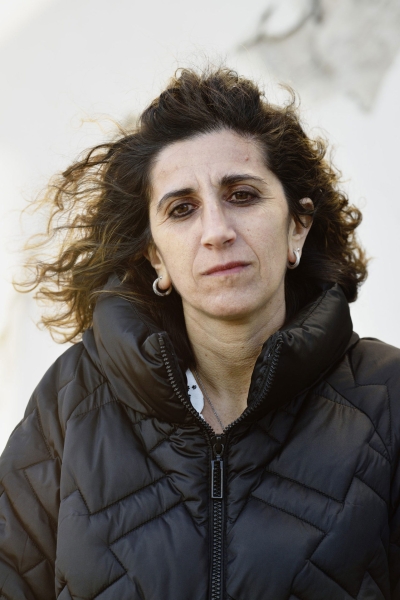 Göran Gnaudschun, Sabrina, 2019, aus: „Stimmen, die sich suchen“, 2018 – 2024
Göran Gnaudschun hat das Dorf und die Menschen portraitiert: Kinder, Heranwachsende und Ältere. Er schrieb dazu „Ich habe in den Gesichtern Trauer und Schmerz, aber auch Widerständigkeit und Stärke gefunden, den tiefen Willen, weiterzumachen, nach vorne zu schauen – für die Familie, die Mitmenschen und für die, die so unvermittelt aus dem Leben gerissen wurden. Ich bin mittels Archiv- und Privatfotos tief in die Vergangenheit des Ortes eingetaucht. So verbinden sich die übervollen Bilder aus der Vergangenheit mit den ruhigen, menschenleeren Aufnahmen der Gegenwart. Die Texte sind Verdichtungen aus Interviews, Protokollen und Büchern. Sie bilden eine eigene Ebene über den Bildern.“
Das Massaker in Onna war eines von vielen in Italien. Die deutsche Schuld wurde nur schleppend aufgearbeitet und kaum gesühnt. Erdbeben gibt es in dieser seismologisch sehr aktiven Region immer wieder. Anhand des kleinen Dorfes Onna lässt sich aber aufzeigen, wie sehr die großen Weltläufe in das Leben jedes einzelnen eingreifen, wieviel Leid entfesselte Kriege der Zivilbevölkerung zufügen, wie sich Traumata durch die Generationen ziehen und durch weitere Katastrophen neue Nahrung bekommen. „Stimmen, die sich suchen“ ist eine Arbeit über Erinnerung, über das Vergehen von Zeit, über Schmerz und Verlust, aber auch über die menschliche Fähigkeit, trotz allem das eigene Leben zu leben.
 Göran Gnaudschun, Prozession, 2019
„Stimmen, die sich suchen“ wurde in einer ersten Version 2019 vom Goethe-Institut Rom in Zusammenarbeit mit der Casa Onna kuratiert und finanziert. 2021 wurde eine zweite Version auf der Architekturbiennale Venedig im italienischen Pavillon gezeigt.
Das Haus am Lützowplatz präsentiert nun die dritte erweiterte und finale Version der Ausstellung. Zum Abschluss des Projektes erscheint das vom büro uebele gestaltete Buch „Stimmen, die sich suchen“ im Verlag Edition Fotohof Salzburg.
Die Ausstellung im Haus am Lützowplatz wird realisiert in Kooperation mit dem Goethe-Institut Rom und der Deutschen Akademie Rom Villa Massimo.
Programm
Mittwoch 2. Juli 2025, 19:00 Uhr
Künstlergespräch und Buchvorstellung: Göran Gnaudschun mit Brigitte Werneburg
Mittwoch, 16. Juli 2025, 19:00 Uhr
Kuratorenführung im Dialog: Marc Wellmann im Gespräch mit Barbara Esch-Marowski, Leiterin Haus am Kleistpark
Veranstaltungssprache: deutsch
Weitere Informationen zur Ausstellung finden Sie
hier .
_________
English Version
On the occasion of the 80th anniversary of Europe’s liberation from National Socialism, Haus am Lützowplatz is presenting a solo exhibition by the photographer Göran Gnaudschun (*1971 in Potsdam).
On 6 April 2009 at 3:32 a.m., a devastating earthquake shook the Italian city of L’Aquila and its surrounding region. On the occasion of the 80th anniversary of Europe's liberation from National Socialism, Haus am Lützowplatz is presenting a solo exhibition by the photographer Göran Gnaudschun (*1971 in Potsdam).
On 6 April 2009 at 3:32 a.m., a devastating earthquake shook the Italian city of L’Aquila and its surrounding region. One of the hardest-hit places was the village of Onna, located on the outskirts. Of its 300 residents, 40 lost their lives that night. Only a field of rubble remained. During the Second World War, the village had already suffered a tragic fate: on 11 June 1944, retreating soldiers of the German Wehrmacht committed a massacre and destroyed nearly a third of all buildings.
The small village of Onna is a place marked by pain. Almost every family here has experienced loss. Many were buried under the debris. It is not easy to live with that. An earthquake is more than the trembling of stones – it is a shock to the belief in the stability of the world and exposes its impermanence. Ten years after the quake, the people of Onna still live in makeshift shelters next to the ruins that once were their village. Reconstruction progresses only slowly.
Göran Gnaudschun portrayed the village and its people – children, adolescents, and the elderly. He writes: “I saw grief and pain in their faces, but also resilience and strength, a deep will to carry on, to look ahead – for the family, for others, and for those who were so suddenly torn from life. I delved deep into the village’s past through archive material and private photographs. The overflowing images of the past intertwine with the quiet, deserted scenes of the present. The texts are condensed from interviews, reports, and books. They form a separate layer above the images.”
The massacre in Onna was one of many in Italy. Germany’s guilt was only slowly acknowledged and rarely atoned for. Earthquakes frequently strike this seismically active region. Yet Onna reveals how profoundly global events shape individual lives, how war inflicts immense suffering on civilians, and how trauma passes through generations, only to be reignited by new catastrophes. “Stimmen, die sich suchen” (Voices in Search of One Another) is a work about memory, the passage of time, about pain and loss – but also about the human capacity to continue living one’s life despite it all.
“Stimmen, die sich suchen” (Voices in Search of One Another) was first curated and funded by the Goethe-Institut Rome in 2019, in collaboration with Casa Onna. In 2021, a second version was presented at the Venice Architecture Biennale in the Italian Pavilion.
Haus am Lützowplatz (HaL) is now presenting the third expanded and final version of the exhibition. To mark the conclusion of the project, the book „Stimmen, die sich suchen“, designed by büro uebele, will be published by Edition Fotohof Salzburg.
Program
Wednesday, July 2, 2025, 7:00 PM
Artist talk and book release: Göran Gnaudschun with Brigitte Werneburg
Wednesday, July 16, 2025, 7:00 PM
Curators' Dialogue Tour: Marc Wellmann in conversation with Barbara Esch-Marowski, Director of Haus am Kleistpark
Event language: German
_________
Versione italiana
In occasione dell’80º anniversario della liberazione dell’Europa dal nazionalsocialismo, la Haus am Lützowplatz presenta una mostra personale del fotografo Göran Gnaudschun (*1971 a Potsdam).
Il 6 aprile 2009, alle 3:32 del mattino, un devastante terremoto colpì la città italiana dell’Aquila e la sua regione circostante. Particolarmente tragica fu la sorte del villaggio di Onna, situato nella periferia: dei suoi 300 abitanti, 40 persero la vita quella notte. Non restò altro che un campo di macerie. Già durante la Seconda guerra mondiale, il villaggio era stato segnato da un evento funesto: l’11 giugno 1944, durante la ritirata, soldati della Wehrmacht tedesca perpetrarono un massacro e distrussero quasi un terzo degli edifici.
Il piccolo villaggio di Onna è un luogo del dolore. Quasi ogni famiglia ha subito perdite. Molti rimasero sepolti sotto le macerie. Vivere con questo peso non è facile. Un terremoto è più di un tremore della terra: è uno sconvolgimento della fiducia nella solidità del mondo e rivela la sua precarietà. A dieci anni dal sisma, gli abitanti di Onna vivono ancora nelle casette accanto al campo di rovine che un tempo era il loro paese. La ricostruzione procede a rilento.
Il fotografo di Potsdam Göran Gnaudschun ha ritratto il villaggio e i suoi abitanti: bambini, adolescenti e anziani. Scrive:
«Nei loro volti ho visto tristezza e dolore, ma anche resistenza e forza, una profonda volontà di andare avanti, di guardare al futuro – per la famiglia, per gli altri, per chi è stato strappato improvvisamente alla vita. Mi sono immerso nel passato del luogo attraverso archivi e fotografie private. Le immagini cariche del passato si intrecciano così con le vedute silenziose e deserte del presente. I testi sono condensazioni di interviste, protocolli e libri. Costituiscono un livello autonomo rispetto alle immagini.»
Il massacro di Onna fu uno dei tanti avvenuti in Italia. La colpa tedesca è stata affrontata solo lentamente e raramente espiata. I terremoti colpiscono ripetutamente questa regione ad alta attività sismica. Il caso del piccolo villaggio di Onna mostra quanto profondamente gli eventi globali influenzino le vite dei singoli, quanto dolore causino le guerre alla popolazione civile, come i traumi si trasmettano attraverso le generazioni e vengano ravvivati da nuove catastrofi.
“Stimmen, die sich suchen” (Voci che si cercano) è un’opera sulla memoria, sul trascorrere del tempo, sul dolore e sulla perdita – ma anche sulla capacità umana di continuare a vivere la propria vita, nonostante tutto.
“Stimmen, die sich suchen” (Voci che si cercano) è stato presentato per la prima volta nel 2019, curato e finanziato dal Goethe-Institut di Roma in collaborazione con Casa Onna. Nel 2021, una seconda versione è stata esposta alla Biennale di Architettura di Venezia, nel Padiglione Italia.
Haus am Lützowplatz presenta ora la terza versione ampliata e finale della mostra.A conclusione del progetto, il libro „Stimmen, die sich suchen“, progettato da büro uebele, sarà pubblicato dalla casa editrice Edition Fotohof di Salisburgo.
La mostra presso la Haus am Lützowplatz è realizzata in collaborazione con il Goethe-Institut di Roma e L’Accademia Tedesca Roma Villa Massimo.
Programma
Mercoledi 2 luglio 2025, ore 19:00
Incontro con l’artista e presentazione del libro: Göran Gnaudschun in conversazione con Brigitte Werneburg
Mercoledì 16 luglio 2025, ore 19:00
Visita guidata dialogica: Marc Wellmann in conversazione con Barbara Esch-Marowski, direttrice della Haus am Kleistpark
Lingua dell’evento: tedesco
_________
Haus am Lützowplatz
Fördererkreis Kulturzentrum Berlin e.V.
Lützowplatz 9
10785 Berlin
Haus am Lützowplatz |
KarteSponsored
Lützowplatz 9, 10 785 Berlin