english below
Am 11. November 26 wurde "Go Clara Go" im Willy-Brandt-Haus in Anwesenheit der Regisseurin Sylvie Kürsten gezeigt. Daniela Kloock hat den Dokumentarfilm anlässlich der Vorführung besprochen.
Moschisten aller Länder vereinigt euch!
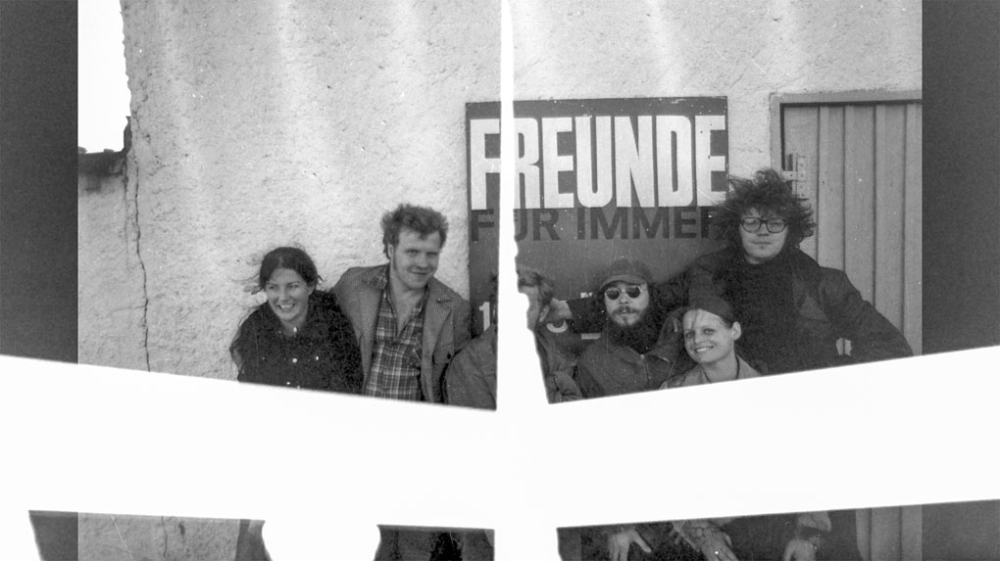
Moschisten, Druck- oder Denkfehler? Keineswegs: Moschisten gab es wirklich. So nannten sich die fünf Mitglieder einer ostdeutschen Künstlergruppe, die man im Westen wohl als veritable Anarchisten bezeichnet hätte. Carlfriedrich Claus, Thomas Ranft, Dagmar Ranft-Schinke, Michael Morgner und Gregor-Torsten Schade fassten ihre Namen unter dem Akronym „Clara Mosch“ zusammen. Das war Spiel und Tarnung zugleich, markierte jedoch auch die programmatische Ausrichtung ihrer künstlerischen Produktionen - ein Mix aus Dada, Dürer und Duchamp, wie sie selbst gern sagten.
Als 1977 unter großem staatlichen Tamtam in Chemnitz, damals Karl-Marx-Stadt, der gigantische Kopf des Namenspatrons enthüllt wurde, jubelten diese Künstler mitnichten dem „Nischel“ zu, sondern experimentierten in einer künstlerischen Gegenwelt unter dem Motto „gemeinsam sind wir stark“. Denn alles, was die Moschisten produzierten, war gegen oder unter dem Schirm des „Systems“. Und „das System“, das war nicht nur die Bespitzelung durch die Stasi, die zu foppen der Gruppe viel Spaß machte, sondern es war auch das Kunstsystem der DDR als solches. Wiewohl hier äußerst unterschiedliche Stile und Ausdrucksweisen aufeinander trafen, einte die Künstler ihre Ablehnung des sogenannten Sozialistischen Realismus mit seiner Verherrlichung des Arbeiter- und Bauernstaats.

Die Untergrund-Arbeit von Clara Mosch begann mit einer ersten gemeinschaftlichen Ausstellung in einer Art Ladengalerie. Doch bald lud die Gruppe auch andere „enfants terribles“ der Republik ein, unter anderem Gerhard Altenbourg, Horst Bartnig, Max Uhlig. Über die Grenzen hinweg berühmt wurden sie vor allem durch ihre temporären Aktionen, Happenings und Pleinair-Performances. Bei „Bäume verbinden“ etwa kletterten die Künstler auf tote Äste und umwickelten sie mit Mullbinden, um auf den Umgang der DDR mit Natur aufmerksam zu machen. Eine andere spektakuläre Aktion war „Das schwarze Frühstück“: Gregor-Torsten Schade saß in einem komplett schwarz gestrichenen Raum und zelebrierte ein Frühstück am schwarz gestrichenen Tisch. Mit einer schwarzen Zeitung, im Format des Neuen Deutschland, aß er eine, sogar innen geschwärzte Banane. „Ein biedermeierliches Zauberstück“ nannte es damals der Kunsthistoriker Eugen Blume.
Die Liste der fantasievollen und kritischen Interventionen ist lang – sie reicht von legendären Festen, Happenings und Lesungen bis hin zu dem berühmt gewordene Fußballspiel gegen Vertreter der Leipziger Schule. 1982 war dann jedoch Schluss. Der innere und äußere Druck war zu groß geworden.
Wie die Regisseurin Sylvie Kürsten dieses zweifelsohne wenig bekannte Kapitel ostdeutscher Kunstgeschichte in ein gleichermaßen informatives wie innovatives filmisches Gerüst bringt, und dabei auch noch einen höchst eigenwilligen Stil findet, ist eine kleine Kino-Sensation.

Sie nutzt hierfür zwei Kunstgriffe: Da ist einmal eine weibliche Stimme aus dem Off, die quasi Clara Mosch selbst ist, die nachfragt oder stellenweise erfrischend frech und bissig kommentiert. Und eine Tänzerin, die - zum Teil in Doppelbelichtungen und anderen verfremdenden Bildüberlagerungen - den Film strukturiert. Die Tanzeinlagen geben dem Film Zeit, um über das Erzählte der Protagonisten nachzudenken. Denn natürlich hat die Regisseurin die noch lebenden Künstler aufgesucht und interviewt. Da es kaum Filmmitschnitte existieren, sind es vornehmlich die Fotografien von Ralf-Rainer Wasse, der die ephemeren Aktionen mit der Kamera festgehalten hat, und somit der Garant eines Erinnerungsspeichers war. Dass ausgerechnet er im Nachhinein als Stasi-Spitzel enttarnt wurde, ist ein besonders bitterer Aspekt der Geschichte um Clara Mosch.
Nach dem Film will man sich jedenfalls sofort aufmachen zu Gunar Barthel, der in seiner Berliner Galerie in der Fasanenstraße bis zum heutigen Tag Bewahrer und Verwalter großer Teile des Archivs ist.
Und es kommt einem auch ein Gedanke von Joseph Beuys, den dieser Film aufs Treffendste visualisiert: „Das Geld muss raus aus dem Kreislauf, denn die Kreativität des Menschen, das ist das wahre Kapital“.
Der Film „Go Clara Go” läuft in der ARD- und MDR-Mediathek
noch bis zum 6.02.2027.
Weitere Informationen zu Clara Mosch auf art-in-berlin:
- Kosmos. Künstlerische Netzwerke der DDR zu sehen im Schloss Biesdorf
________________
Go Clara Go – The Art of Survival at the Border
Film Review Daniela Kloock
Moschists of all countries, unite!
Moschists—a typo or a slip of the tongue? By no means: Moschists really existed. This was the name chosen by the five members of an East German artist group who, in the West, would likely have been described as veritable anarchists. Carlfriedrich Claus, Thomas Ranft, Dagmar Ranft-Schinke, Michael Morgner, and Gregor-Torsten Schade combined their names into the acronym “Clara Mosch.” This was both play and camouflage, yet it also marked the programmatic direction of their artistic productions—a mix of Dada, Dürer, and Duchamp, as they liked to say themselves.
When the gigantic head of the namesake patron was unveiled in 1977 amidst great state fanfare in Chemnitz—then Karl-Marx-Stadt—these artists were by no means cheering for the “Nischel” (the “Head”); instead, they experimented in an artistic counter-world under the motto “together we are strong.” For everything the Moschists produced was either against or under the umbrella of “the system.” And “the system” was not just the surveillance by the Stasi, which the group took great pleasure in fooling, but also the GDR art system as such. Although highly diverse styles and modes of expression collided here, the artists were united by their rejection of so-called Socialist Realism with its glorification of the workers' and peasants' state.
The underground work of Clara Mosch began with an initial collaborative exhibition in a sort of shop-gallery. But the group soon invited other “enfants terribles” of the Republic, including Gerhard Altenbourg, Horst Bartnig, and Max Uhlig. They became famous beyond the borders primarily through their temporary actions, happenings, and plein-air performances. In “Bäume verbinden” (Connecting Trees), for instance, the artists climbed onto dead branches and wrapped them in gauze bandages to draw attention to the GDR's treatment of nature. Another spectacular action was “Das schwarze Frühstück” (The Black Breakfast): Gregor-Torsten Schade sat in a room painted completely black and celebrated a breakfast at a black-painted table. With a black newspaper in the format of Neues Deutschland, he ate a banana that was even blackened on the inside. “A Biedermeier-esque magic trick,” the art historian Eugen Blume called it at the time.
The list of imaginative and critical interventions is long—ranging from legendary parties, happenings, and readings to the now-famous football match against representatives of the Leipzig School. However, it came to an end in 1982. The internal and external pressure had become too great.
How director Sylvie Kürsten brings this undoubtedly little-known chapter of East German art history into a cinematic framework that is both informative and innovative, while also finding a highly idiosyncratic style, is a minor cinematic sensation.
She employs two artistic devices for this: first, there is a female voice-over, essentially Clara Mosch herself, who asks questions or provides refreshingly cheeky and biting commentary. And a dancer who structures the film—partly through double exposures and other alienating image overlays. The dance sequences give the film time to reflect on the protagonists' narratives. For naturally, the director sought out and interviewed the surviving artists. Since hardly any film recordings exist, it is primarily the photographs of Ralf-Rainer Wasse, who captured the ephemeral actions with his camera, that serve as the guarantor of a memory store. The fact that he of all people was later exposed as a Stasi informant is a particularly bitter aspect of the Clara Mosch story.
After the film, one immediately feels like setting off to Gunar Barthel, who remains the custodian and administrator of large parts of the archive at his Berlin gallery on Fasanenstraße to this day.
The film aptly visualizes a core idea of Joseph Beuys: “Money must leave the circulation, for human creativity is the true capital.”
The film “Go Clara Go” is available in the ARD and MDR media libraries until February 6, 2027.
On November 11, the film was shown at the Willy-Brandt-Haus in the presence of the director, followed by a discussion.